






公開されたおすすめリスト
30代おっさんの青春アニメ一覧
きっと共感する人もいるはず!
2026年度公開予定のアニメ
2026年度公開予定の映画
年末年始にぴったりの映画
クリスマスにぴったりの映画
2026年度公開予定のドラマ
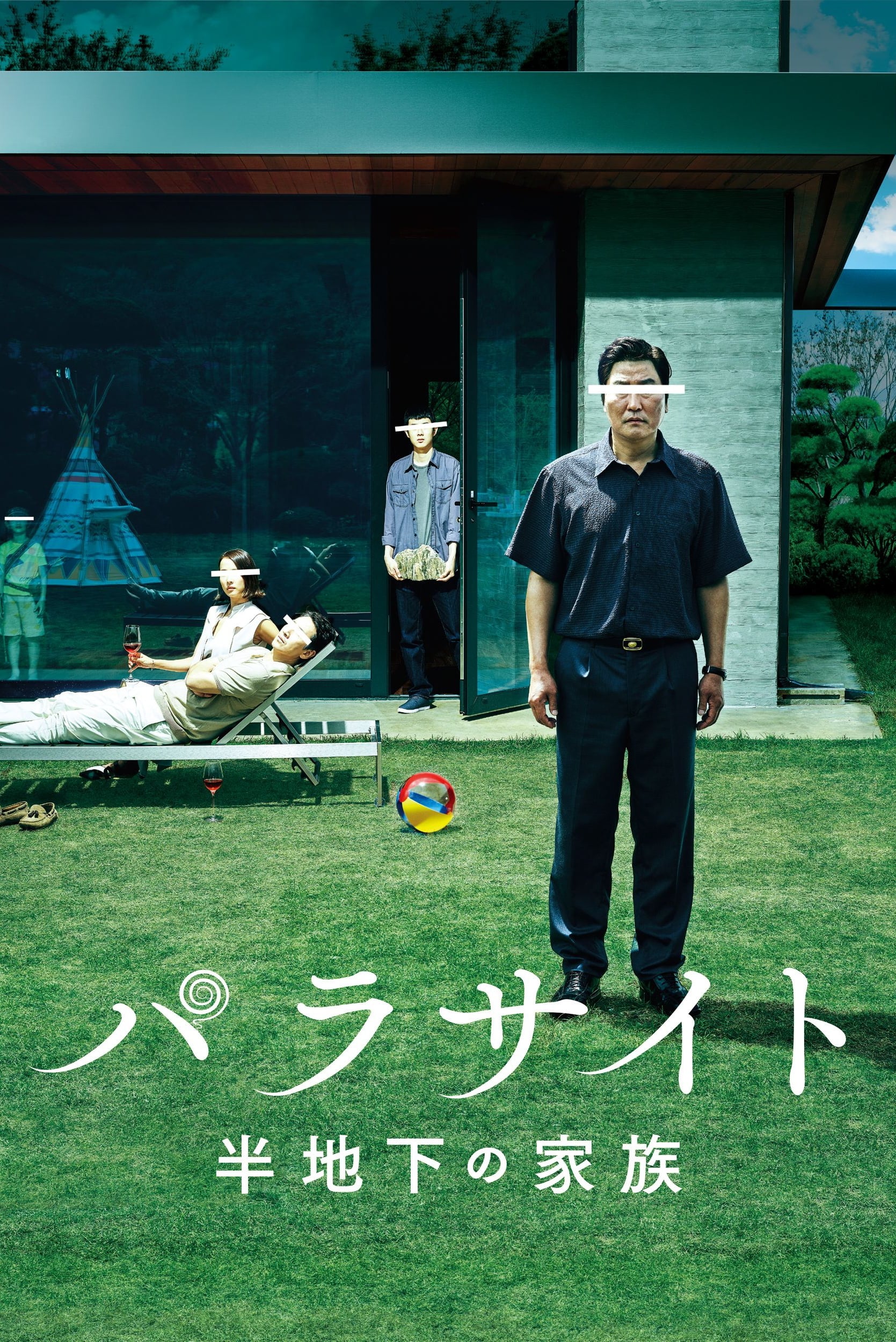
パラサイト 半地下の家族
作品情報
| カテゴリ | 映画 |
|---|---|
| ジャンル |
コメディ
スリラー
ドラマ
|
| 概要 | 過去に度々事業に失敗、計画性も仕事もないが楽天的な父キム・ギテク。そんな甲斐性なしの夫に強くあたる母チュンスク。大学受験に落ち続け、若さも能力も持て余している息子ギウ。美大を目指すが上手くいかず、予備校に通うお金もない娘ギジョンは、“ 半地下住宅”で 暮らす貧しい4人家族だ。“半地下”の家は、暮らしにくい。窓を開ければ、路上で散布される消毒剤が入ってくる。電波が悪い。Wi-Fiも弱い。水圧が低いからトイレが家の一番高い位置に鎮座している。家族全員、ただただ“普通の暮らし”がしたい。受験経験は豊富だが学歴のないギウは、ある時、エリート大学生の友人から留学中の代打を頼まれる。ギウが向かった先は、IT企業の社長パク・ドンイク一家が暮らす高台の大豪邸だった。 |
| キャスト(俳優・女優・声優) |
Kim Ki-taek(송강호)
Park Dong-ik(이선균)
Yeon-kyo(チョ・ヨジョン)
Ki-woo(チェ・ウシク)
Ki-jung(박소담)
Chung-sook(장혜진)
Moon-gwang(イ・ジョンウン)
Da-hye(정지소)
Da-song(정현준)
Geun-se(박명훈)
Driver Yoon(박근록)
A Singer(이지혜)
German Mother(윤안나)
German Father(안드레아스 프론크)
Neighbor(정익한)
Pizza Manager(정이서)
Min-hyuk(박서준)
Party Man(이주형)
JTBC Reporter(윤혜리)
Pizza Man(조재명)
JTBC Reporter(서복현)
JTBC Reporter(심수미)
Namgung Hyun-ja(신승민)
Italy Chef(리카르도 페라레소)
Southeast Asian Housekeeper(로지 페랄타)
Detective(이시훈)
Drunk 1(김규백)
Doctor(고관재)
Street Man(안성봉)
Party Man(백승환)
Party Woman(박혜숙)
Party Man(김건)
Cellist(김보령)
Drunk 2(이동용)
Mart Cashier(전은미)
Assistant Chef(최정현)
Party Kid(김하언)
Real Estate Woman(이은희)
Party Woman(최지원)
Designer Lee Ha-bong(박재완)
PC Room Staff(황인경)
Party Man(김영조)
Party Man(김정우)
Party Woman(이상경)
Golf Player(이시후)
Shelter Official(안진상)
|
| 公開日 | 2019-05-30 |
| 製作会社 |
Barunson E&A
|
| 視聴可能な動画を探す | JustWatchで動画を検索する |
AIに聞いてみた!作品へのポイント

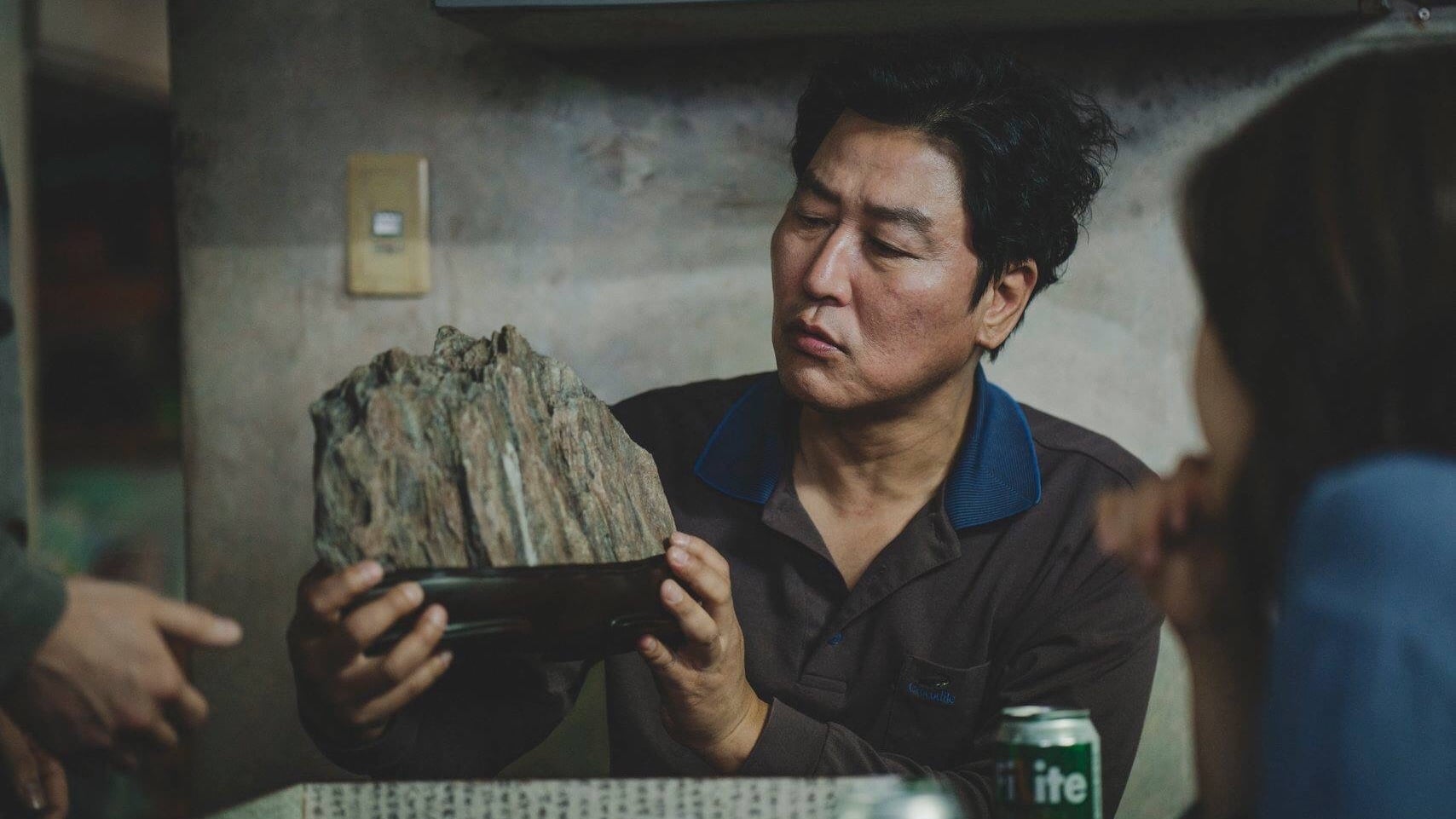
『パラサイト 半地下の家族』に関連する画像(全89件)




『パラサイト 半地下の家族』に関連する動画(全4件)
この作品によく似ている映画

過去に度々事業に失敗、計画性も仕事もないが楽天的な父キム・ギテク。そんな甲斐性なしの夫に強くあたる母チュンスク。大学受験に落ち続け、若さも能力も持て余している息子ギウ。美大を目指すが上手くいかず、予備校に通うお金もない娘ギジョンは、“ 半地下住宅”で 暮らす貧しい4人家族だ。“半地下”の家は、暮らしにくい。窓を開ければ、路上で散布される消毒剤が入ってくる。電波が悪い。Wi-Fiも弱い。水圧が低いからトイレが家の一番高い位置に鎮座している。家族全員、ただただ“普通の暮らし”がしたい。受験経験は豊富だが学歴のないギウは、ある時、エリート大学生の友人から留学中の代打を頼まれる。ギウが向かった先は、IT企業の社長パク・ドンイク一家が暮らす高台の大豪邸だった。

関わってきた人々もろとも両親の家に突っ込もうとするパイロット、間違いで車をレッカー移動されたことが原因で転がり落ちるように全てを失った男の復讐劇、結婚式で人生最大のピンチを迎えるカップル・・・。小さなきっかけで人生が狂ってしまった人々のエピソードを、サスペンス、コメディー、バイオレンスなど違う手法で紡ぐ6話オムニバス。


この作品を観た人におすすめする作品

第一次世界大戦真っ只中の1917年のある朝、若きイギリス人兵士のスコフィールドとブレイクにひとつの重要な任務が命じられる。それは一触即発の最前線にいる1600人の味方に、明朝までに作戦中止の命令を届けること。この伝令が間に合わなければ味方兵士全員が命を落とし、イギリスは戦いに敗北することになる――。刻々とタイムリミットが迫る中、2人の危険かつ困難なミッションが始まる・・・。

リック・ダルトンはピークを過ぎたTV俳優。映画スターへの道がなかなか拓けず焦る日々が続いていた。そんなリックを支えるクリフ・ブースは彼に雇われた付き人でスタントマン、そして親友でもある。目まぐるしく変化するエンタテインメント業界で生き抜くことに精神をすり減らし情緒不安定なリックとは対照的に、いつも自分らしさを失わないクリフ。この二人の関係は、ビジネスでもプライベートでもまさにパーフェクト。しかし、時代は徐々に彼らを必要とはしなくなっていた。そんなある日、リックの隣に時代の寵児ロマン・ポランスキー監督と女優のシャロン・テート夫妻が越してくる。落ちぶれつつある二人とは対照的な輝きを放つ二人。この明暗こそハリウッド。リックは再び俳優としての光明を求め、イタリアでマカロニ・ウエスタン映画に出演する決意をするがー。そして、1969年8月9日ーそれぞれの人生を巻き込み映画史を塗り替える【事件】は起こる。
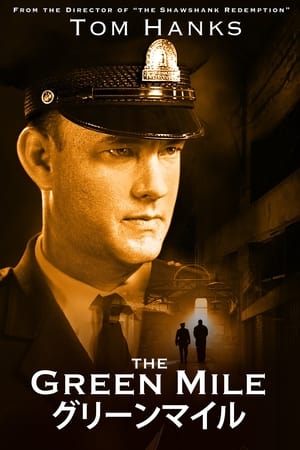
大恐慌中の1935年。コールドマウンテン刑務所にあり、処刑室に続く通路があせた緑色であるため、“グリーンマイル”と呼ばれる死刑囚専用棟に殺人犯コーフィが収監される。だが、幼女惨殺の罪状とは裏腹に、コーフィは素晴らしい力を持っていた。彼は看守長ポールの重度の尿路感染症を治癒し、残忍な看守パーシーに踏み殺されたネズミをよみがえらせる。奇跡を目の当たりにしたポールはコーフィが本当に殺人犯なのか疑いだす。

1981年、犯罪が多発する大都会ゴッサムシティ。ピエロの仕事をしているアーサーは貧しく、老いた母親ペニーと暮らす上、突然笑いだしてしまうという心の病に悩むが、TV界の人気司会者フランクリンを憧れの対象にして日々耐え忍んでいた。ある日、失業したアーサーは地下鉄で、女性客に嫌がらせをしていた男性3人組を偶然持っていた拳銃で皆殺しにしてしまう。以後アーサーは、自身の心にあった怒りを解放させていく。
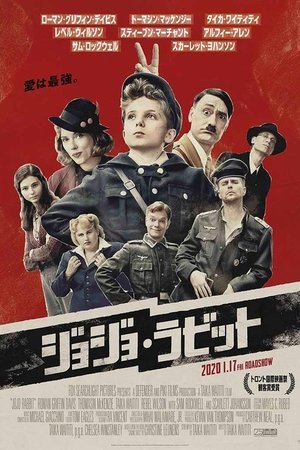
戦時下のドイツで暮らす10歳の心優しい少年の視点を通し、困難な中で生きる人々の希望と喜びを描き出す。タイカ・ワイティティ監督、スカーレット・ヨハンソンら実力派キャストによる感動のヒューマン・ドラマ。
The Movie Database(TMDB)で登録されたこの作品に対するレビュー・評価
What makes ‘Parasite’ so satisfying is that it commits neither error. It’s an engrossing, stylish and near perfect movie, and its underlying themes go beyond merely pointing out class exploitation to challenge the logic of capital. Though he is often juggling a mosaic of characters, themes and social issues, Bong never eschews his anarchic impulses and dark humour. It’s a movie that should be seen as widely as possible, if only so that Bong Joon-ho gets more chances to make movies for modern audiences that badly need them.
- Jake Watt
Read Jake's full article...
https://www.maketheswitch.com.au/article/review-parasite-a-bloodthirsty-and-very-funny-look-at-class-warfare
Head to https://www.maketheswitch.com.au/sff for more Sydney Film Festival reviews.
The working class and down on their luck Kim family struggle to make ends meet. When a friend of the son, Ki-Woo’s, who is an English tutor for the daughter in the wealthy Park family, has to leave his position, he recommends Ki-Woo for the job. Now having an "in" with the wealthy family, the Kims begin plotting the downfall of the current household servants and inserting themselves into those vacant positions, making them all gainfully employed and with money finally flowing into the household. But not everything is as it seems in the Park house or with their previous servants.
This movie starts out as a comedy and quickly goes into social commentary, pointing out the differences between the poor working class family and the wealthy privileged family. The differences are ones that get commonly pointed out with the well-to-do having what usually gets termed as first-world-problems, while the poor family is literally trying to survive and save meager possessions in a flood. It doesn’t shy away or try to be subtle about it, but interestingly enough, we don’t feel beaten over the head with it either, which is a major change from the ham-fisted approach taken by most filmmakers. Couching this in a comedy is a good approach, as well, as the audience’s guard is let down and we become more receptive to the ideas.
However, I do say it’s MOSTLY a comedy. The third act takes a dark, dark turn, and the contrast, not to mention general disdain and even indifference, between the classes becomes much more severe. This gets into some hard territory, and characters that we’ve found quirky and even come to like in some ways show very different sides of themselves. At the same time, it doesn’t feel unexpected, almost like we could tell that this was under the surface all the time and tried to ignore it, but aren’t surprised by it when it does show up. This is some masterful characterization!
Another aspect of note is that this film is rich in allegory and metaphor. It’s a smart film, yet at the same time the filmmakers are not condescending about it. They give the audience credit for being able to understand the symbolism and don’t spoon feed you everything, which is a refreshing change from the usual head-beating most filmmakers go for. At the same time, they understand that not every audience member will understand or immediately pick up on every symbol, but they have crafted this so carefully and so perfectly that you don’t have to understand each and every one. That understanding merely enriches the experience, but isn’t essential to it.
This film has gotten some recognition, and deservedly so. It is rich, intelligent, and polished to a degree that we sadly don’t see as often as we should nowadays, showing the filmmakers are masters of their craft. This is easily one of the best films I’ve seen in 2019. Highly recommended!
This is VERY HIGHLY OVERRATED.
The most part of the movie is foul-playing, most of those scenes seem to have been copied from the 1999/old Vijay’s movie: Minsaara Kannan [IMDB: https://www.imdb.com/title/tt7562630/?ref_=nv_sr_srsg_2], (Warning: This again might be a copy of some other movie as well].
“Morse code” has been used in a much better way in 2017 Ajith’s film: Vivegam [IMDB:https://www.imdb.com/title/tt6878378/?ref_=nv_sr_srsg_0] [Letterboxd: https://letterboxd.com/film/vivegam/]
I just don’t understand what makes this movie so special that it has been appraised so highly. It is not even 10% of the Tamil movies at this level/standard.
People who’re praising this movie must start watching Tamil movies instead of Korean, there are so many gems that have gone unnoticed.
There is really nothing special in this movie that stands out.
Cannot digest that an average movie like this has got so much limelight. Btw: Where does this kinda BS trend start off?
errbnb
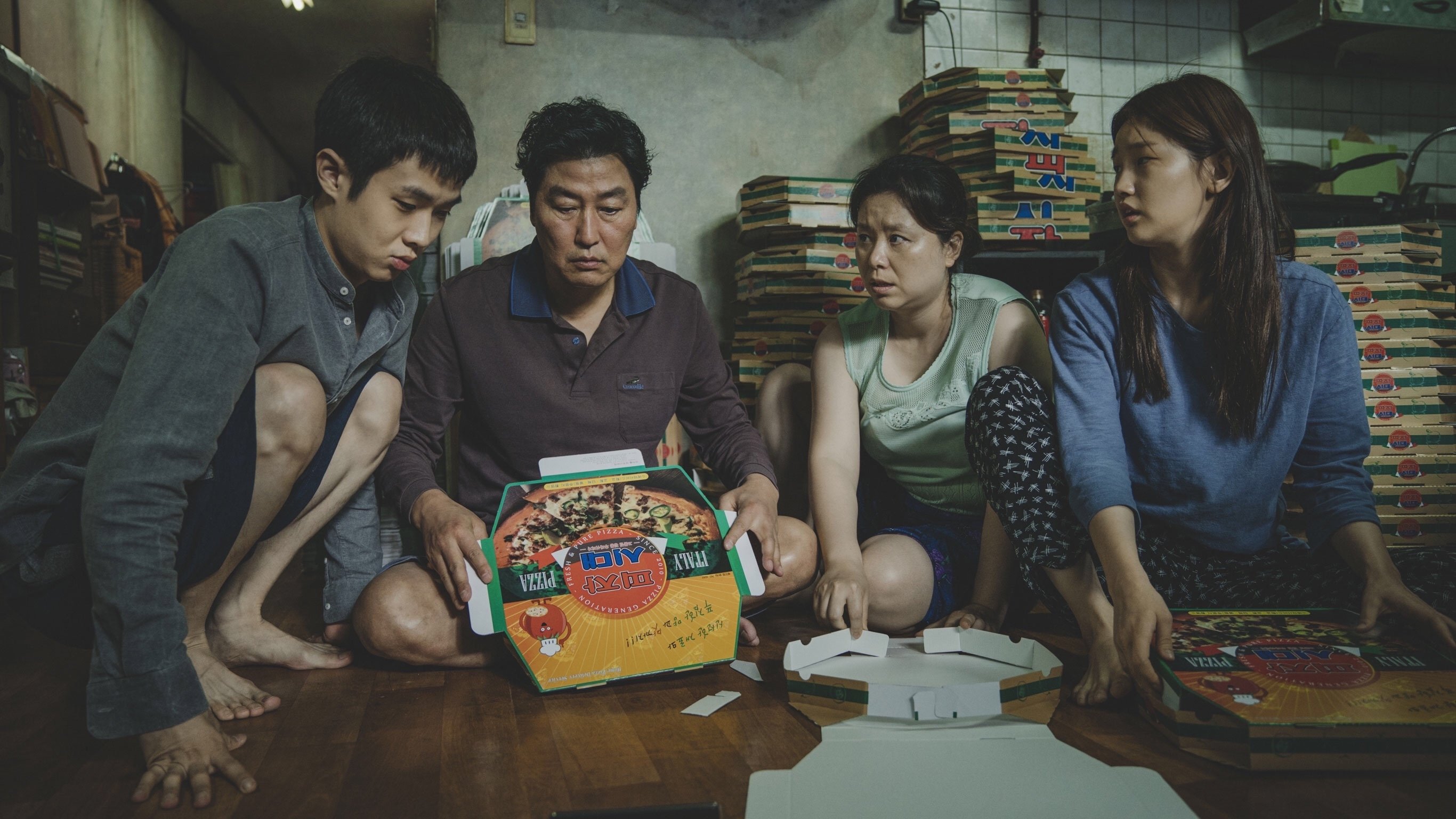
News that Adam McCay is collaborating with Bong Joon Ho to retool Parasite as a Netflix series makes me positively giddy. Parasite is easily the best movie I've seen since the Big Short. Joon Ho's compelling ease of execution alongside the effortless lure of the plot's trappings had me hooked in an instant. I would have been happy watching this family fold pizza boxes for two hours. The story, like the family, takes on a life of its own, rapidly elevating to a setup impossible to sustain. The Bunuelesque occupy-the-rich scheme gleefully, blissfully ascends to lofty heights only, inevitably, to hit the fatal fan. The poor buggers ultimately find themselves literally chin deep in their own sh*t. The hotsy-totsy aristocrats, meanwhile, host a lovely garden party that flips into a tragic Shakespearean bloodbath. It's all fun and games till someone loses a daughter. (Note to the rich: Check the references of new hires and think twice before inviting riffraff to your afternoon functions). Decades in the making, the implosion of a middle income buffer and a widening disparity between social classes make Parasite a must-see for all income brackets. You don't have to be rich or detest or envy the rich to enjoy this instant classic. But please, whatever you do, don't try this a home, folks. Never combine the rich and poor without safety goggles or outside the confines of a controlled and supervised laboratory setting.
"You know what kind of plan that never fails? No plan. No plan at all. You know why? Because life cannot be planned."
'Parasite' is absolutely fantastic. I'm still buzzing how good this movie is. Unpredictable and nuts. You know, this summer I was starting to get a little worn out with the endless sequels, remakes and soulless crash grabs, so I find it refreshing we get movies like this once awhile.
I admire Bong Joon-Ho as a director, especially his Korean movies. Not to say I dislike his English language films like 'Snowpiercer' and 'Okja', but in my personal opinion those don't match the same quality as his Korean movies and there isn't a sex pest trying to control his work. Anywhere, Bong Joon-Ho is one of the best working directors alive and 'Parasite' proves it.
The movie perfectly blends drama and comedy so effortlessly, it basically breaks the impossible. And the comedy is actually hilarious and well written with the execution being sold on the actors. The thing I love so much is how funny, thrilling and intense the movie can be, hijacking all senses and emotions all wrapped into one - only a few directors can pull something this unique.
The performances from everyone was brilliant and there's so much depth to each character, they make the movie as captivating as it is. The cinematography was beautiful, the music was remarkable, and the movie says so much it's the reason why I was engaged throughout.
I highly recommend people to avoid knowing anything before going in, because trust me it will add to your experience.
Overall rating: Finally, a breath of fresh air. My second favorite movie of this year.
If you enjoy reading my Spoiler-Free reviews, please follow my blog @
https://www.msbreviews.com
Yes, I know. I'm late as hell. I don't really have anything to offer you besides my personal opinion. Theses and video essays are breaking down Parasite at such a deep level that I can't really write anything new. Nevertheless, I'll share my thoughts on it because it would be a massive miss from someone who considers himself as a film critic. I had this movie on my watchlist since last summer, but I kept delaying it, underestimating my time. So, no, I'm not just watching Parasite because it won Best Picture at the Oscars, I always planned on it.
In addition to that, yes, I also love it like most people, and no, I'm not writing this because I'm "following the pack". Bong Joon Ho simply delivered one of 2019's best films, and it's definitely cracking a spot in my Top10. I really enjoyed what Bong did with Okja, and I'm a massive fan of Snowpiercer. Therefore, this isn't just another South Korean flick. It's directed and co-written by someone who has been proving himself for quite some time. Even though I still defend that Sam Mendes deserved to win Best Director for his work on 1917, I'm more than happy that a foreign movie finally won Best Picture, and what a film to do it!
It can be described as a dark dramedy, but I think social satire is more adequate. The differences between the rich and the poor are beautifully shown on-screen exclusively through visuals. There's so little exposition, which is one of the reasons why Parasite has one of 2019's best screenplays. The balance between explaining something and leaving it ambiguous is perfect. Throughout the runtime, Bong Joon Ho leans on an actor's face so that the audience can understand what that character is feeling through its expressions, which will explain its actions later on.
There's a sequence that surely has been heavily discussed for the past months. It's raining, and Bong cleverly divides the screen with how the wealthy family is dealing with it against the poor neighborhood where the Kim family comes from. The gorgeous cinematography, the unforgettable musical score, the seamless editing... Everything about this sequence is technically flawless, and it carries such an emotionally powerful message. Something astonishing and beautiful to look at for some can be a horrible disaster for others.
It's a movie that balances a lot of tones. In ten minutes, the tone goes from funny to dramatic to suspenseful to scary to absolute tragedy... and it all feels incredibly realistic. That's one of my major compliments to Parasite: I never felt like it was fiction. I never thought "this is too much, this would never occur". Even in the third act, where the narrative takes some bold decisions, everything makes sense with what had been shown until then. From shocking character actions to surprising plot points, Bong and Han Jin-won's screenplay is excellent.
Everyone in the cast is fantastic, but Song Kang-ho is the standout, in my opinion. His role as the father of the Kim family is brilliant. I'm actually surprised he wasn't nominated for Best Actor in more award shows. I created a connection with this family in such a way that the ending truly impacted me. It's tough to deny that the writing is what makes Parasite the phenomenon that so many people fell in love with, myself included.
Technically, I don't have any defects to point out. It's one of those films that I firmly believe in having virtually no flaws. I'm in love with the score, I gasped several times at the impressive cinematography, and the editing is perfect. Whatever genre the story decides to go to, it's always entertaining and extremely captivating. Its comedy is very smart, and it made me laugh a lot of times. Its dramatic storylines kept my eyes always focused on what was happening. Even when it briefly delves into the horror territory, it's more suspenseful and scary than most of that genre's flicks nowadays.
All in all, Parasite genuinely surprised me. With so many people hyping it to a ridiculously high level, my expectations were very moderate. Nevertheless, I love it as much or more as everyone else. I know that watching it this late can make some people question my opinion/rating, but I would never love a movie because I "should" or because other people do. It deserves every award it received, especially the ones concerning the screenplay. It's one of the best original stories of the last few years, and it's written in such a brilliant manner, with beautiful visual storytelling instead of the overused exposition. An emotionally resonant message is present throughout the whole runtime, and the various tones are balanced seamlessly. Technically flawless: cinematography, score, editing... everything's absolutely perfect. Nothing is placed without purpose. Not a single line of dialogue is wasted. Bong Joon Ho is a phenomenal filmmaker, one that cares about the art and everything that comes with it. He truly put his heart and soul into this, and it would be a shame if anyone fails to watch this magnificent movie just because it's in a foreign language. Please, don't make such an awful mistake...
Rating: A+
Decent enough dark comedy/thriller, with nice performances and an engaging story, though not entirely sure it was Best Picture worthy though reserving judgment as I've only seen one other nominee, Joker which I loved but not worthy of a BP.
I don't know, maybe I'm a bit disappointed given the awards the film won and my viewpoint would've been different seeing it a couple weeks back. As it is, had some entertaining and thrilling moments, but emotionally can't say I was invested... **3.75/5**
**_An uncategorisable masterpiece_**
>_We fat all creatures else to fat us, and we fat ourselves for maggots. Your fat king and your lean beggar is but variable service – two dishes, but to one table._
- William Shakespeare; _The Tragicall Historie of Hamlet Prince of Denmarke_, 4.iii.23-24 (1599-1601)
What is one to make of the utterly uncategorisable and impossible-to-define _Gisaengchung_ [_Parasite_]? Only the third film to win both the Palme d'Or and the Academy Award for Best Picture, after Billy Wilder's _The Lost Weekend_ (1945) and Delbert Mann's _Marty_ (1955), _Parasite_ is one of the best-reviewed films of the century thus far and caused huge waves when it became the first non-English language film to win Best Picture. Co-writer and director Bong Joon-ho also tied with Walt Disney for the most Oscars awarded to one person in one night – four (Best Picture, Best Foreign Language Film, Best Director, and Best Original Screenplay). On top of that, he became the first person in history to win more than three Oscars for a single film. In short, Parasite has had a significant, and relatively unexpected, impact.
But what exactly is _Parasite_? Described on its official website as a "_pitch-black modern fairy-tale_", even a comprehensive plot summary wouldn't adequately delineate its real nature – part comedy of manners, part social satire, part heist film, part thriller, part horror, part family drama, part farce, part economic treatise, part social realism, part tragedy, part allegory. And that's just the opening scene! It's the _Ulysses_ of cinema, adopting and shedding genres so often and so seamlessly that it effectively becomes its own genre. And, like _Ulysses_, it's exceptional in just about every way – screenplay (co-written by Bong and Han Jin-won), directing, cinematography, _mise en scène_, editing, production design, sound design, score, acting. There's not a weak link here, in a film that achieves that rarest of things – it lives up to the hype.
The Kim family are down on their luck. Father Ki-taek (Song Kang-ho), mother Chung-sook (Chang Hyae-jin), daughter Ki-jeong (Park So-dam), and son Ki-woo (Choi Woo-shik) reside in a tiny basement apartment, with their only window looking out onto a popular urination spot in a back alley. With all four unemployed, they eke out a meagre living folding pizza boxes for a nearby restaurant. However, their fortunes change when Ki-Woo meets Min-hyuk (Park Seo-joon), a childhood friend who is now at university. Min-hyuk works as an English tutor for the daughter of a wealthy family, but he's soon to leave Korea, and so suggests that Ki-Woo take over. Armed with a fake diploma created by Ki-jeong on Photoshop, Ki-Woo successfully applies for the job. The Park family, father Dong-ik, (Lee Sun-kyun), mother Yeon-gyo (Cho Yeo-jeong), daughter Da-hye (Jung Ji-so), and son Da-song (Jung Hyeon-jun), welcomes Ki-woo into their lavish home, and upon discovering just how wealthy the Parks are, the Kims hatch an elaborate scheme to oust the Park's current domestic staff and take their places. And so, hiding the fact that they're all related, Ki-taek is hired as a chauffeur, Chung-Sook as a housekeeper, and Ki-jeong as an art therapist for Da-song. However, it doesn't take long before things start to go very, very awry for both families, in ways none of them (or the audience) could ever have imagined.
We live in an era where wealth is distributed upwards and the gap between the haves and have-nots is wider than ever. According to inequality.org, the richest 1% of the world's population controls 45% of global wealth. At the same time, adults with less than $10,000 capital make up 64% of the population and control less than 1% of the wealth. In 2018, Oxfam reported that the wealth of the 26 richest people in the world was equal to the combined wealth of the 3.5 billion poorest people. This is the _milieu_ of _Parasite_, a film which taps into some of the same ideological thinking as gave rise to "_Hell Joseon_" sentiments, wherein up to 75% of Koreans aged 19-34 want to leave the country.
Obviously enough, Bong's main themes are class division and class conflict, the artificiality of societal hierarchy, and the concomitant social inequality and differentiation in status that makes such a hierarchy possible in the first place. As thoroughly entertaining (and funny) as the film is, it remains, in essence, an economic treatise, albeit with a savagely satirical quality. However, make no mistake, this is a satire with teeth – the hilarity and playfulness of the long first act give way to a darker political vibe in the second, before Bong violently deconstructs his own allegory in the emotionally draining and batshit insane third act, ultimately driving the knife home in an epilogue that's about as different from the film's early scenes as you could imagine. Of course, this is far from the first time Bong has dealt with issues of class, touching obliquely on similar themes in _Sarinui Chueok_ [_Memories of Murder_] (2003), _Gwoemul_ [_The Host_] (2006), and _Madeo_ [_Mother_] (2009). _Parasite_'s engagement with class and economics, however, is far more overt, aligning it with Bong's English-language work, _Snowpiercer_ (2013) and _Okja_ (2015). Never before, however, has he been this caustic, this acerbic, but so too this compassionate, this witty. Indeed, _Parasite_ feels like a culmination, the film to which he's been building for his entire career.
In the film's press notes, Bong states;
>_I think that one way to portray the continuing polarisation and inequality of our society is as a sad comedy. We are living in an era when capitalism is the reigning order, and we have no other alternative. It's not just in Korea, but the entire world faces a situation where the tenets of capitalism cannot be ignored. In the real world, the paths of families like our four unemployed protagonists and the Park family are unlikely ever to cross. The only instance is in matters of employment between classes, as when someone is hired as a tutor or a domestic worker. In such cases there are moments when the two classes come into close enough proximity to feel each other's breath. In this film, even though there is no malevolent intention either side, the two classes are pulled into a situation where the slightest slip can lead to fissures and eruptions. In today's capitalistic society there are ranks and castes that are invisible to the eye. We keep them disguised and out of sight, and superficially look down on class hierarchies as a relic of the past, but the reality is that there are class lines that cannot be crossed._
In this manner, the film works as a literalisation of the theory that co-existence between the various classes is becoming increasingly difficult; the Kims and the Parks aren't simply differentiated due to wealth, rather they live in completely different worlds and have vastly different, and largely incompatible, ideologies.
One of the most deftly-handled elements of the film is Bong's avoidance of the clichés one so often finds in films dealing with economics – the Kims are by no means the default protagonists, a victimised family immediately worthy of sympathy, whilst the Parks are by no means the default antagonists, a callous family immediately worthy of scorn. Rather, the Parks are depicted as perfectly friendly and pleasant whilst the Kims are shown to be liars and scoundrels. Indeed, it's the Kims who are the more crassly materialistic of the two families – obsessed with their mobile phones and WhatsApp, we first meet them as they're wandering around their apartment, phones held aloft, trying to pick up their neighbour's WiFi signal. Later, as they ingratiate themselves with the Parks and acquire more and more access to a wealthy lifestyle, all four Kims start to carry themselves differently, as if being in such proximity to wealth has had a physiological effect.
There are no heroes and villains here – Bong is uninterested in trucking in black and white oppositions because such rigid diametrics aren't the norm in the real world. For all their scheming and lying, the Kims merely con their way into menial jobs, trying to earn enough to make survival a little easier. As for the Parks, their wealth has insulated them from the world of families such as the Kims, but their greatest crimes are disconnection and ignorance, nothing more. At the same time, the Kims are depicted as a far more unified and loving family than the Parks. Although all four Kims regularly occupy the same frame, to the best of my recollection, we never see the four Parks together in the same shot; Da-hye and Da-song rarely leave their rooms, Yeon-gyo spends most of her time in the kitchen and living room, and Dong-ik is seen most regularly in his car. It's a wonderful bit of cinematic shorthand to convey a thematic point, with Bong utilising the visual component of the medium to maximum effect – this is a filmmaker who knows precisely what he's doing.
It's in relation to the two family's status as heroes or villains that the film's title is so important. Strictly speaking, the Korean title, "_기생충_" ("gisaengchung"), means "helminth" rather than "parasite", but as a helminth is a parasitic worm, the slight difference in the translation isn't a big deal. In any case, a parasitic organism such as a helminth lives in or on a host and takes its nourishment from that host. A simple reading of this is that the Kims are the parasites and the Parks are the hosts, with the Kims feeding off the Parks' wealth and status. However, in a film where nothing is as it seems, things aren't that simple. Bong depicts the Parks as parasites as well – they've been rendered relatively helpless by their wealth, unable to complete basic tasks such as driving or cleaning without the assistant of working-class employees; i.e. they sustain themselves based off of the labour of their servants. And so, just as the Kims feed off the Parks, the Parks feed off the Kims, in what quickly becomes a symbiotic relationship. Concerning this issue, in his Director's Statement, Bong says,
>_it is increasingly the case in this sad world that humane relationships based on co-existence or symbiosis cannot hold, and one group is pushed into a parasitic relationship with another. In the midst of such a world, who can point their finger at a struggling family, locked in a fight for survival, and call them parasites? It's not that they were parasites from the start. They are our neighbours, friends and colleagues, who have merely been pushed to the edge of a precipice._
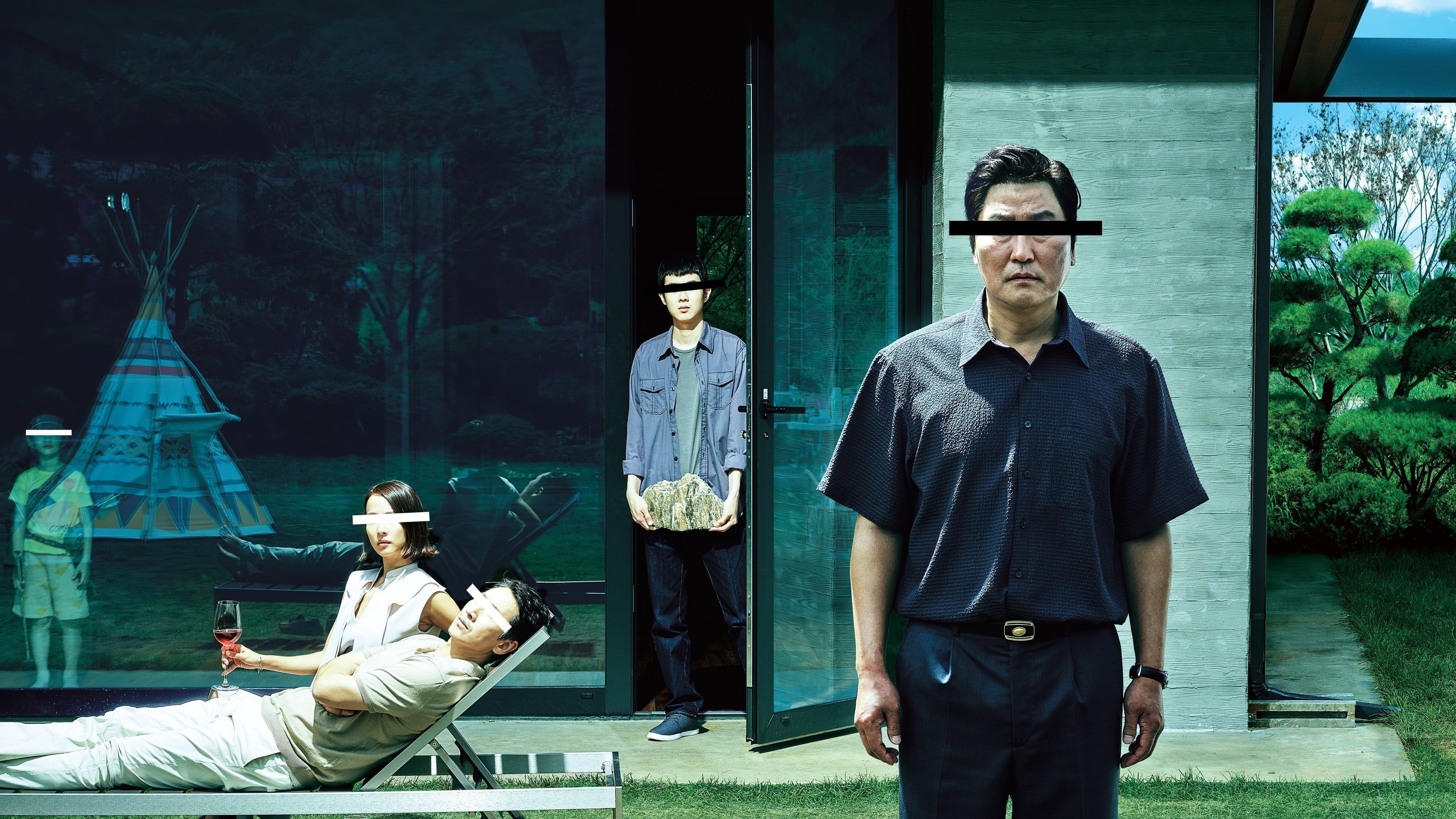
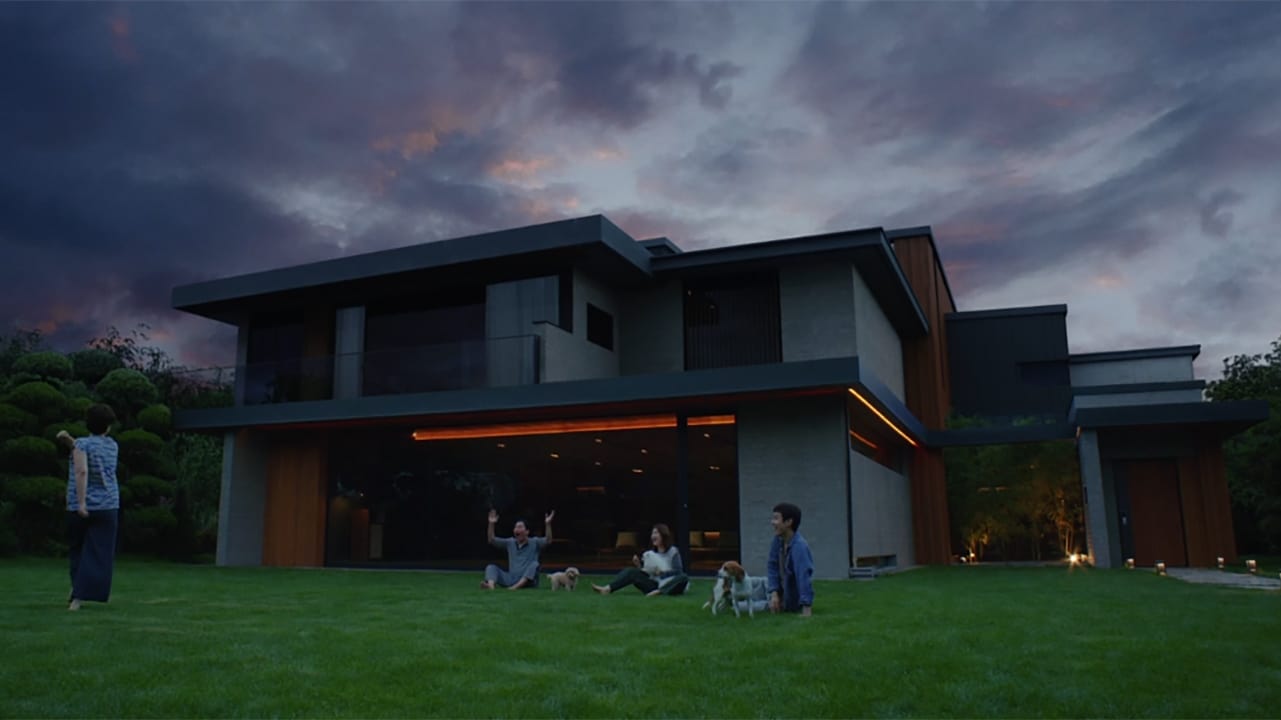
However, as strong as the film is narratively and thematically, it also has an aesthetic design to die for. Hong Kyung-pyo's cinematography, for example, is magnificent. Hong also shot Lee Chang-dong's superb _Beoning_ (2018), and the camerawork here has a similar smoothness and restlessness, gliding through the Parks house like it's a fifth member of the Kim family. Lee Ha-jun's production design is also praise-worthy, with the Kims' and Parks' living conditions contrasted in every way; the Parks live in a pristine post-modernist semi-open plan house, accessible only by an electronically controlled gate, and hidden from the street by tall trees and dense shrubs; the Kims, on the other hand, live in a cluttered and dilapidated apartment with barely any room, their toilet situated beside the aforementioned window looking into an alley.
It's also in relation to production design wherein one of the film's best metaphors is to be found, which is also a great example of just how much of a masterwork this is, how completely Bong is in control of his craft. As a film at least partly in the tradition of the "upstairs/downstairs" subgenre (think James Ivory's _The Remains of the Day_ or Robert Altman's _Gosford Park_), Bong literalises the separation between those above and those below insofar as stairways are a recurring motif. The Kims live in a basement apartment without stairs, mirroring their stagnation and inability to rise in a socio-economic sense. On the other hand, the Parks' lavish home has two main stairways – one going up, the other going down into the cellar. As Ki-jeong and Ki-woo gain more access to Da-song and Da-hye, they start to spend most of their time upstairs. Ki-taek and Chung-sook, however, along with Dong-ik and Yeon-gyo, spend most of their time downstairs, indicating a fissure between the adults and their children. The stairway to the cellar is its own unique animal, with Bong shooting it like he's suddenly directing a horror film (there's a thematic reason for this that I can't go into without spoilers). In this way, he bestows upon it an ominousness that, at first, makes little sense, but ultimately reveals itself to be a spectacular bit of foreshadowing. There's also a third stairway in the Park home, one not revealed until late in the second act, but one which has huge narrative and thematic importance.
_Parasite_ is a masterpiece, with Bong, operating at the peak of his abilities, never putting a foot wrong. It could have been a self-serving and didactic message-movie – a homily to the honour of the poor or a deconstruction of the unhappiness of the rich – but Bong is far too talented for that, avoiding rhetorical cant, and allowing the film to find its own space. Quite unlike anything I've ever seen, it works as allegory just as well as it works as social realism just as well as it works as comedy just as well as it works as tragedy, and so on. This is cinema as art; it's the best Palme d'Or winner since Terrence Malick's _The Tree of Life_ in 2011 and the best Best Picture winner since Kevin Costner's _Dances with Wolves_ in 1990. Bong is currently working with HBO to develop a limited series English-language adaptation, which fills me with dread, but no matter what happens with that project, no matter how good (or bad) it may be, here in 2020, Parasite has proven itself very much a game-changer, a film that deserves every bit of praise it's received.
First of all it's a masterpiece, it's shows how the higher class actually judge the lower class people. At it looks like a normal story of a family who all are struggling hard to live, but their life gets changed when all four of them one by one get employed in park's house. After sometime we also got to see the frustration and anger of Kim family on park family because they were judged by them.their were no unnecessarily plot twist in the film which led the film very smoothly. All over it's a must watch film.
"We all live in the same country... called capitalism."
_Final rating:★★★★ - Very strong appeal. A personal favourite._
この作品に対するレビュー・評価
「パラサイト 半地下の家族」のおもしろいポイントは、社会的な階層や貧富の差を巧みに描写している点です。物語は、貧しい半地下の家族と裕福な一家との出会いを通じて、現代社会の格差や価値観の違いを浮き彫りにします。特に、主人公の家族がどのようにして裕福な家族の家に入り込むのか、その過程で起こる出来事が緊迫感と興味を引き立てます。
また、作品はコメディ要素も含んでおり、ユーモア溢れるシーンやキャラクターのやり取りが楽しいです。特に、主人公たちが独自の方法で生活を立て直そうとする姿や、裕福な家族とのやり取りの中で生まれる笑いが魅力的です。
さらに、作品は予測不可能な展開や意外な結末が多く、視聴者を飽きさせることなく引き込んでいきます。登場人物たちの行動や言動が予想外の展開につながることで、常に緊張感を保ちながら物語を楽しむことができます。
「パラサイト 半地下の家族」は、社会派ドラマとしてのメッセージ性や深いテーマと、コメディ要素やサスペンス要素が絶妙に組み合わさった作品として、幅広い視聴者に楽しんでもらえるでしょう。